Accelerating Zero-Emission Vehicle Adoption using Behavioural Science
Impact Canada, Impact & Innovation Unit, Privy Council Office
Key Insights
- Canadians hold some misperceptions about zero-emission vehicles (ZEVs): many underestimate ZEV driving range and performance, and overestimate costs.
- Shifting relevant beliefs and perceptions concerning ZEV affordability, norms, performance, and public charging availability can shift Canadians’ interest in adopting a ZEV.
- Overall, knowledge and attitudes about ZEVs and perceived social norms had the largest unique impact on Canadians’ interest in adopting a ZEV.
Background
In 2022, the Government of Canada released its Emissions Reductions Plan which outlined the Government’s effort to mitigate climate change through significant emissions reductions across multiple sectors. A key component of this plan concerns reducing emissions from the transportation sector, including from private vehicles.
Scientists have demonstrated that switching from a gas- or diesel-powered car to a ZEV is one of the most impactful emissions reductions actions an individual can take. However, while rates of ZEV adoption are on the rise in Canada, in Q1 2023, just 10.5% of new vehicles registered were zero-emission. Further, research from the Program of Applied Research on Climate Action (PARCA) has demonstrated that more than 62% of Canadians support greater climate action, with 25% saying they are willing to make substantial changes in their own lives to limit further climate change. With ZEVs being a pro-climate choice, what might be standing in the way of greater adoption?
This is the question we set out to answer in an online survey experiment. In partnership with Natural Resources Canada, this survey sought information about Canadians interest in ZEVs and some barriers to uptake, in support of the Government of Canada’s target of 100% of new light-duty cars and passenger truck sales being zero-emission by 2035 . Our goal was to better understand how to empower Canadians interested in ZEVs to take action.
Methodology
We recruited 2,731 Canadians – representative of the Canadian population by region, age, and gender – to complete an online study. This study was administered through Qualtrics , an online survey platform that recruits from existing pools of research participants who have agreed to contacted for research studies. Respondents were only eligible for the current study if they intended to purchase or lease a new vehicle within the next five years and did not already own a ZEV.
All respondents first completed questions assessing their familiarity with and attitudes about different aspects of both ZEVs and gas vehicles such as their average cost, driving range, and performance in extreme weather conditions.
Next, using a randomized controlled trial design (also known as an RCT), respondents were assigned to view one of six communications about ZEVs (see Figure 1). Five of the communications addressed different potential barriers to adopting ZEVs, which had been identified in previous research (i.e., cost, convenience, range, norms, lifestyle). The sixth communication was a standard message about the environmental benefits of ZEVs (i.e., the control condition). Respondents then asked whether they intended to purchase a ZEV as their next vehicle.
Respondents were also asked to rate their agreement with a series of belief statements that corresponded to each communication. We hypothesized that more effective messages would increase respondents’ agreement with relevant statements, which could in turn impact respondents’ interest in ZEVs.
This study and its analysis plan were pre-registered on the OECD Observatory of Public Sector Innovation Behavioural Insights Knowledge Hub prior to completing data collection.
Control and Treatment messages shown to survey respondents
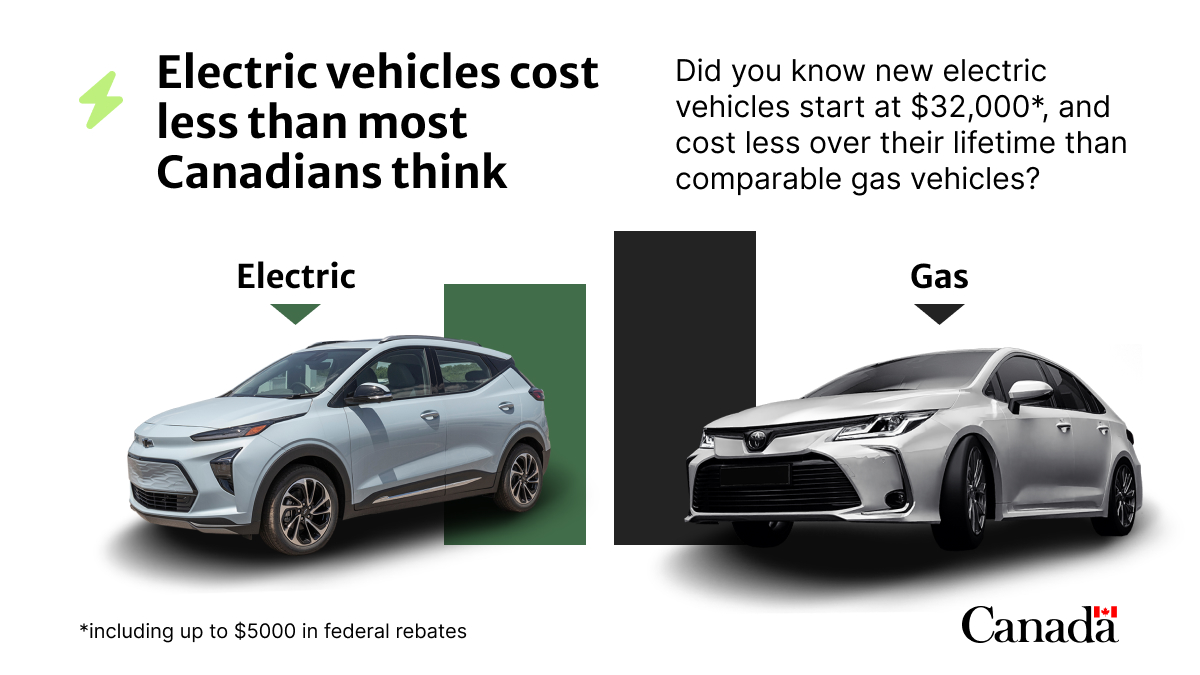
Cost (Treatment condition 1)
ZEVs dismissed out-of-hand as categorically too expensive; consumers are more aware of luxury brands and pricing. This message was designed to reduce sticker shock and establish a lower anchor when it comes to the price of ZEVs.
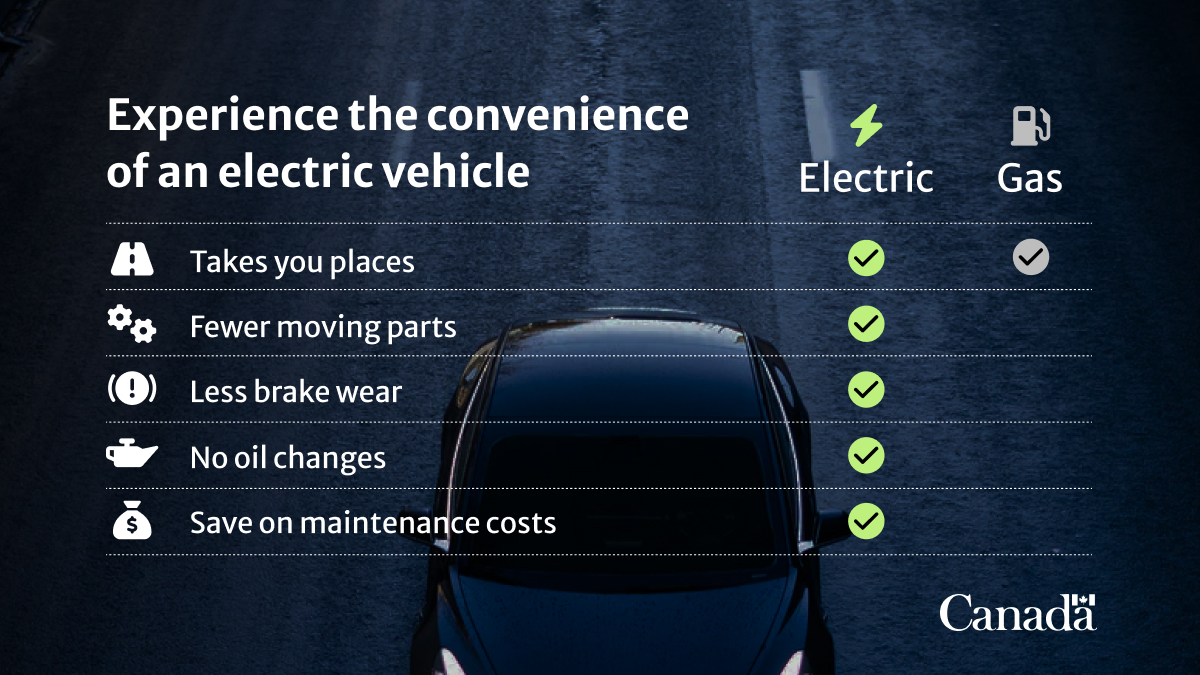
Convenience (Treatment condition 2)
People feel ZEVs are restrictive, without realizing inconveniences that come with ICE driving. This message makes habituated aspects (of ICE driving) more salient.
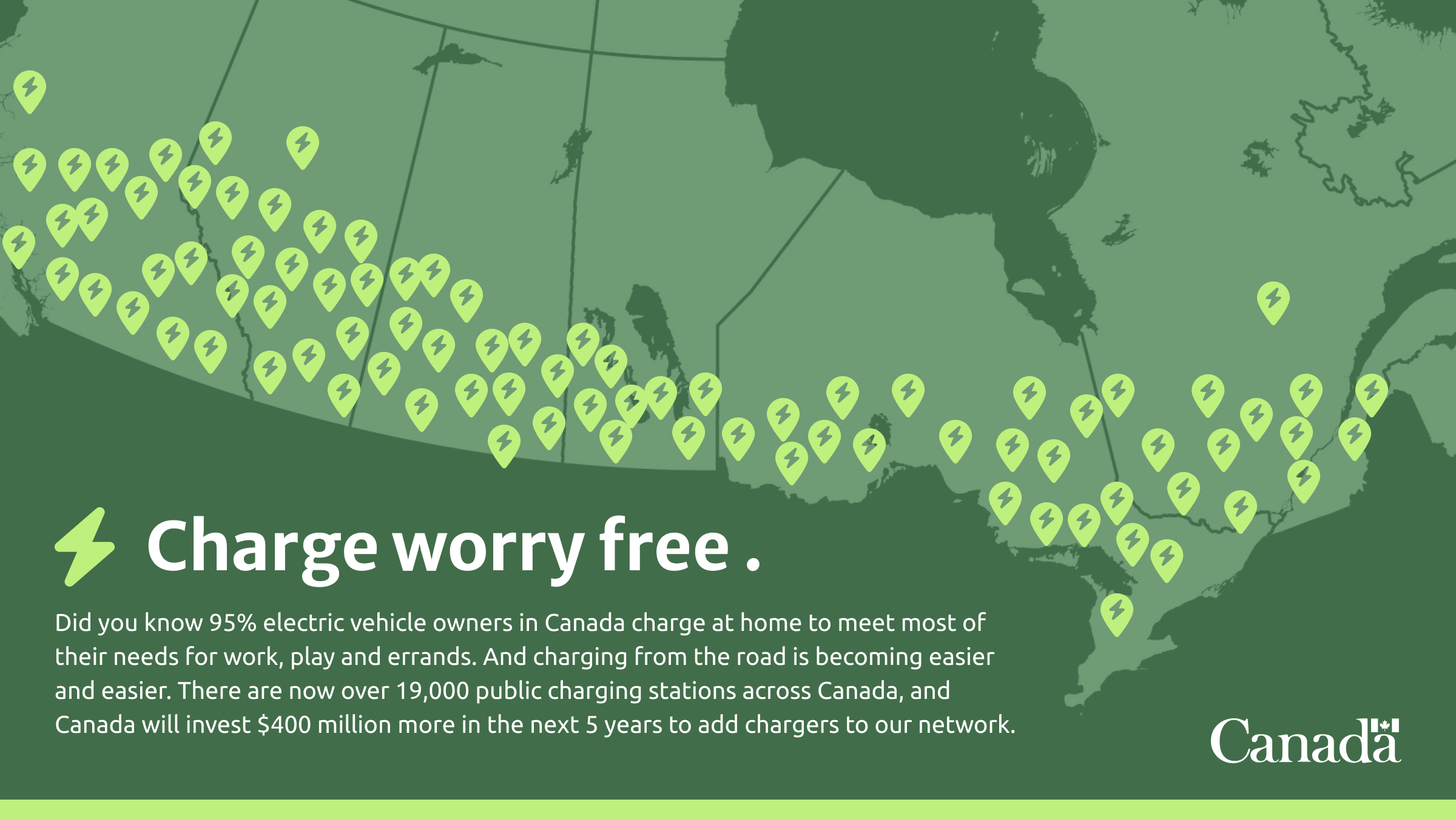
Range (Treatment condition 3)
People feel there aren’t enough chargers to meet their needs but overestimate the extent to which they need public charging. This message increase salience of the closest available charger – at home.
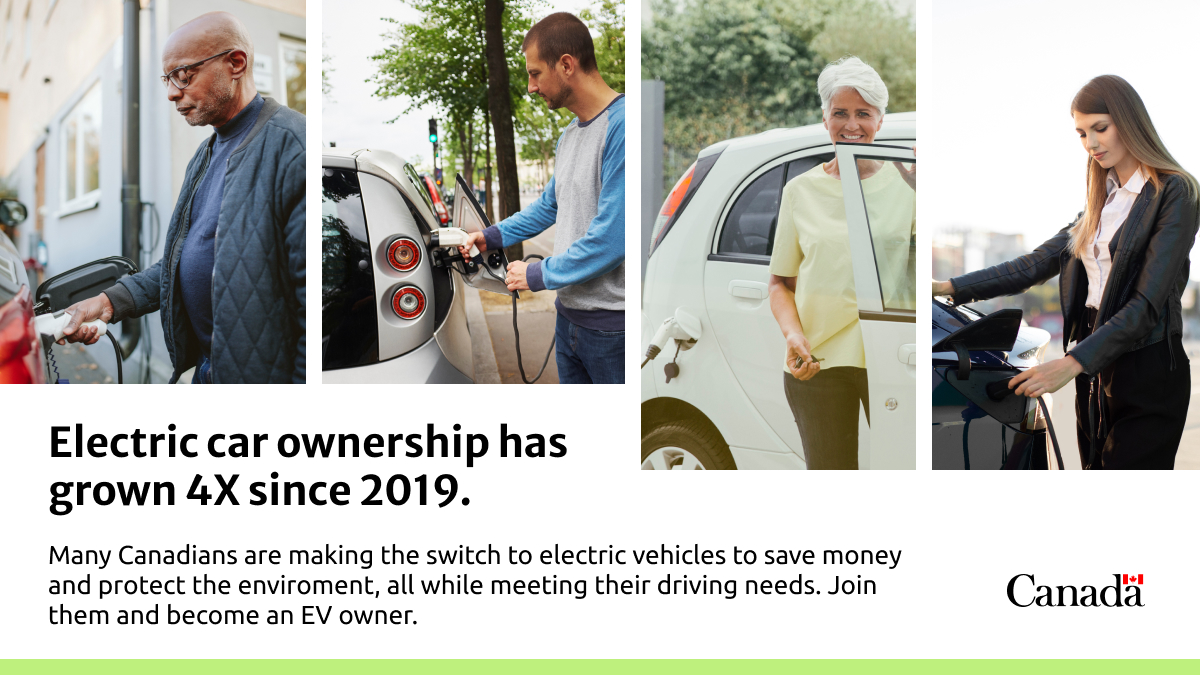
Norms (Treatment condition 4)
People tend to behave in line with their social group(s) and don’t see ZEVs as a typical, normalized purchase. This message invokes identity and presents a social norm.
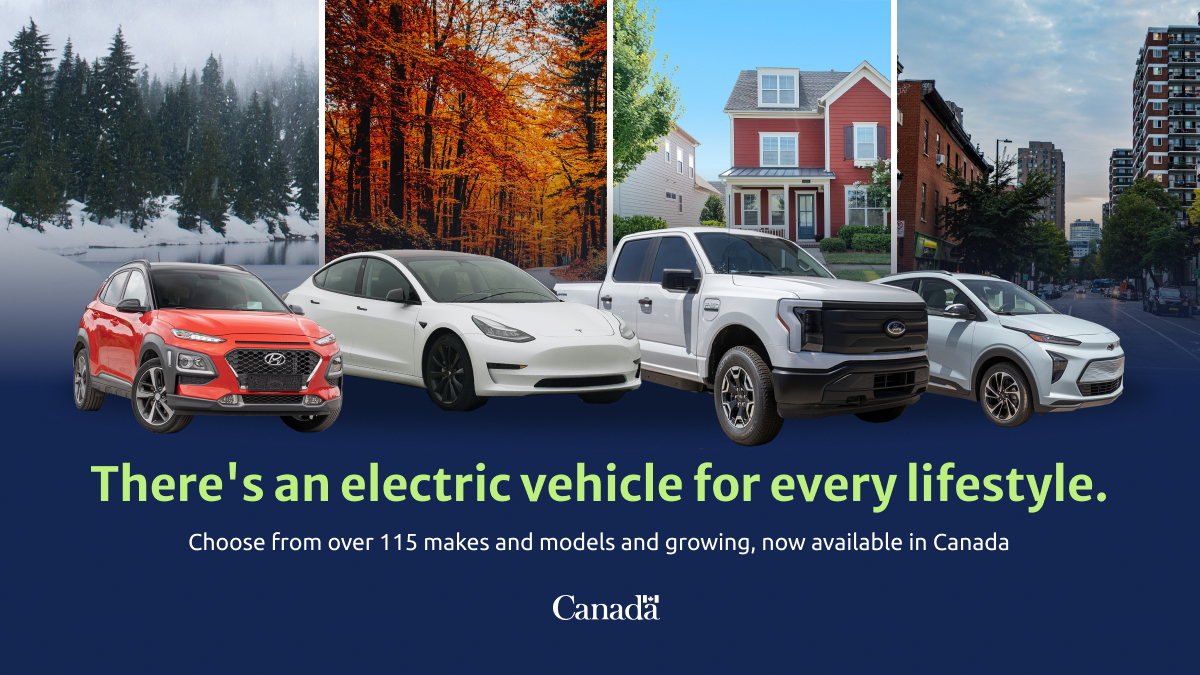
Lifestyle (Treatment condition 5)
People do not feel ZEVs have enough offerings in the desired car class to meet lifestyle needs. This message visually represents choices.
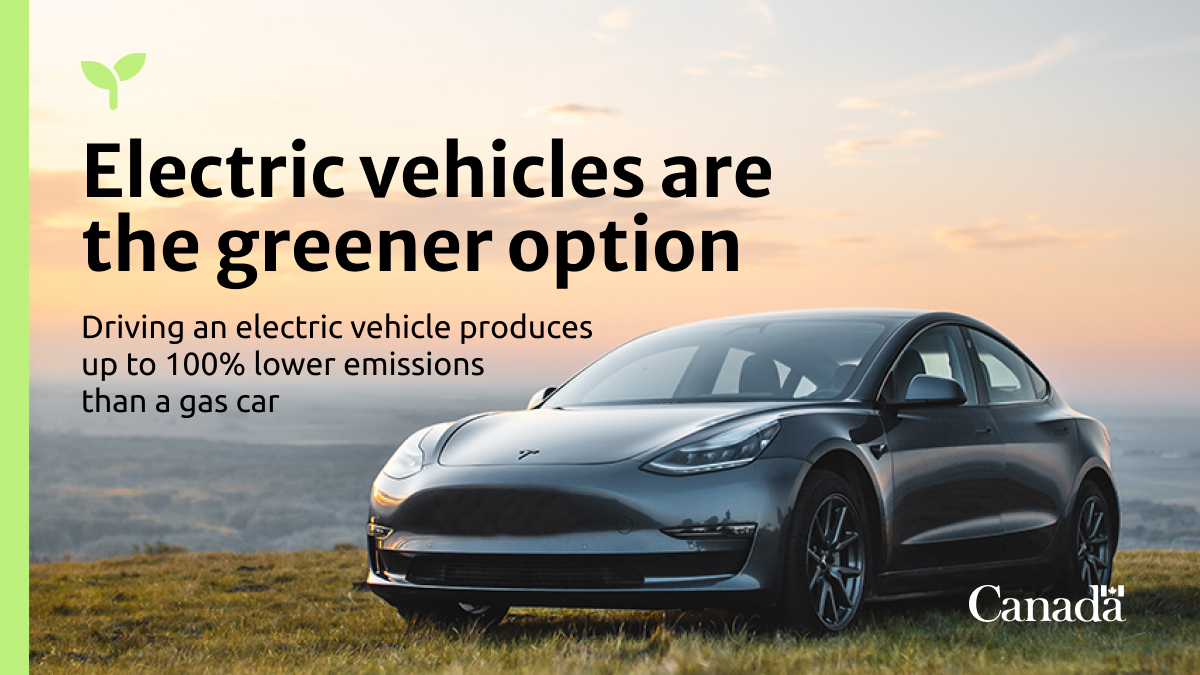
Environmental benefits (Control condition)
Standard message about the environmental benefits of ZEVs.
Table 1. Zero-emission vehicle belief statements
After seeing one of six messages, all respondents rated their agreement with the following 8 ZEV belief statements:
| Electric vehicles can be affordable |
| New fully electric vehicles start at $32,000 |
| Canada has a rapidly growing network of public charging stations for electric vehicles |
| Most people who have an electric vehicle charge at home |
| Many Canadians are now switching from gas vehicles to electric vehicles |
| Operating and maintaining an electric vehicle has conveniences over a gas vehicle |
| Electric vehicles are better for the environment than gas vehicles |
| There are now electric vehicles sold in every vehicle class (e.g. sedans, SUVs, trucks) by major automakers |
Findings
Overall, we found that a majority (58%) of our respondents were at least somewhat interested in purchasing or leasing a ZEV as their next vehicle. However, respondents held a variety of misperceptions about ZEVs, from their costs and range to their performance.
Tendency to overestimate costs, and underestimate range and performance
Respondents overestimated ZEV costs
We found that respondents believed ZEVs to be, on average, $20,000 more expensive than comparable gas vehicles, which is an overestimation of approximately $10,000 when comparing to the average retail price of the bestselling ZEV models in 2021 (see Figure 1). Overall, half of respondents (47%) overestimated the average purchase price of a new ZEV. Respondents, when making these estimates, did not take into consideration federal level rebates, of which 51% of respondents were unaware.
Respondents underestimated a ZEV’s typical driving range
More than half of respondents (55%) estimated typical battery electric vehicles to have 200km to 400km of driving range, which is less than the range from a typical mid-sized electric vehicle (~466km; See Figure 2). Moreover, 86% of respondents reported driving fewer than 300km weekly in comparison to the average milage per year driven by Canadians which is 15,200 km. These results suggest that typical ZEV driving ranges should be sufficient for most Canadians on a single charge per week but that Canadians may be making inaccurate assessments of how current ZEV capabilities align with their weekly driving needs.
Respondents rated ZEVs as inferior to gas- and diesel-powered cars on performance.
When asked to rate ZEVs versus a comparable gas-powered car on performance, safety, reliability, and ease and cost of maintenance, we found that respondents rated ZEVs as inferior to gas- and diesel-powered cars on each aspect. This difference was more prominent when respondents were asked to rate these ZEV performance factors under extreme weather conditions such as extreme heat or cold. Two thirds of respondents (68%) rated ZEVs as slightly worse or much worse than a comparable gas car in extreme weather. Studies show that ZEV safety and reliability are on par with – and have lower maintenance costs than – gas vehicles, suggesting that respondents misperceive the performance of ZEVs overall.
None of the Communications had a significant impact on respondents’ interest in ZEVs; however, perceived norms and knowledge of ZEVs positively predicted intent to adopt a ZEV.
Respondents who saw the Treatment messages were no more likely than those in the Control group to report an interest in adopting a ZEV. However, as planned in our pre-registration, a mediation analysis was performed, finding that while both the Treatment and Control messages successfully shifted respondents’ perceptions of ZEVs, only half of the ZEV belief statements (4 of 8; see Table1, bolded text) were positively related to whether respondents would consider purchasing a ZEV as their next vehicle.
We explored the data using a multivariate regression model to help identify which factors had the largest unique impacts on interest in ZEV adoption. This model revealed 12 key features accounting for 42% of the differences observed in reported ZEV adoption. The largest positive predictors in our model suggested that the more accurate a respondents’ knowledge of ZEVs was, and the more respondents perceived ZEVs as a mainstream choice (a socially normative choice), the more likely they were to express an interest in adopting a ZEV themselves.
Discussion
Results from this work suggest that despite rapidly growing interest, Canadians face numerous barriers to ZEV adoption that behaviourally-informed approaches to communication could address. This research demonstrated that many Canadians perceive ZEVs to be unaffordable, with a plurality (47%) of respondents overestimating the average upfront sticker price of ZEVs by more than $10,000. Previous behavioural science research has demonstrated the impact of present bias – the tendency for people to place greater weight on immediate rewards over future payoffs. In this context, people may be overestimating a ZEV’s upfront cost and placing undue focus on increased upfront spending while underweighting the future operational and maintenance cost-savings a ZEV provides compared to a gas car. Thus, interventions that reduce people’s present bias of the upfront cost and increase the salience of available incentives, or focus on long-term cost savings, may help to frame ZEVs as a more cost-effective choice.
In addition, this research showed that Canadians typically underestimate the driving range offered by ZEVs relative to their typical driving needs. Interventions that increase the salience of a drivers’ actual range needs – for instance, by framing how many commutes or grocery trips could be done on a single charge – or increase the visibility and salience of home and public charging stations could alleviate prospective buyers’ range anxiety.
This study demonstrated that even small digital communications can shift beliefs about ZEV affordability, the growing availability of public chargers, the convenience of choosing an electric vehicle, and the growing popularity of ZEVs. In addition, this research found that accurate knowledge about ZEVs, and believing ZEVs are becoming more and more common, is highly associated with and perhaps even predictive of interest in them. Along with other strategies, messaging that addresses misperceptions about ZEV performance and costs, and/or highlights the growing rates of ZEV adoption, may be worth advancing to overcome key behavioural barriers to ZEV adoption identified in the literature and in this study.
Acknowledgements
This research was conducted by IIU staff, with additional support from Dr. Jennifer Lynes Murray at the University of Waterloo. The study received ethical clearance from the University of Waterloo Research Ethics Board (REB #44620).
Library and Archives Canada Cataloguing in Publication
Accelerating Zero-Emission Vehicle Adoption using Behavioural Science
Information contained in this publication or product may be reproduced, in part or in whole, and by any means, for personal or public non-commercial purposes without charge or further permission, unless otherwise specified. Commercial reproduction and distribution are prohibited except with written permission from the Privy Council Office.
For more information, contact:
Impact Canada, Privy Council Office
85 Sparks Street, Room 1000
Ottawa ON Canada K1A 0A3
info@pco-bcp.gc.ca
© His Majesty the King in Right of Canada, 2024.
Cette publication est également disponible en français : Accélérer l’adoption de véhicules zéro émission à l’aide des sciences du comportement
ISBN:
978-0-660-69730-7
CP22-212/2024E-PDF